2024 Wildfire Season: Another Year of Destruction and Rising Costs
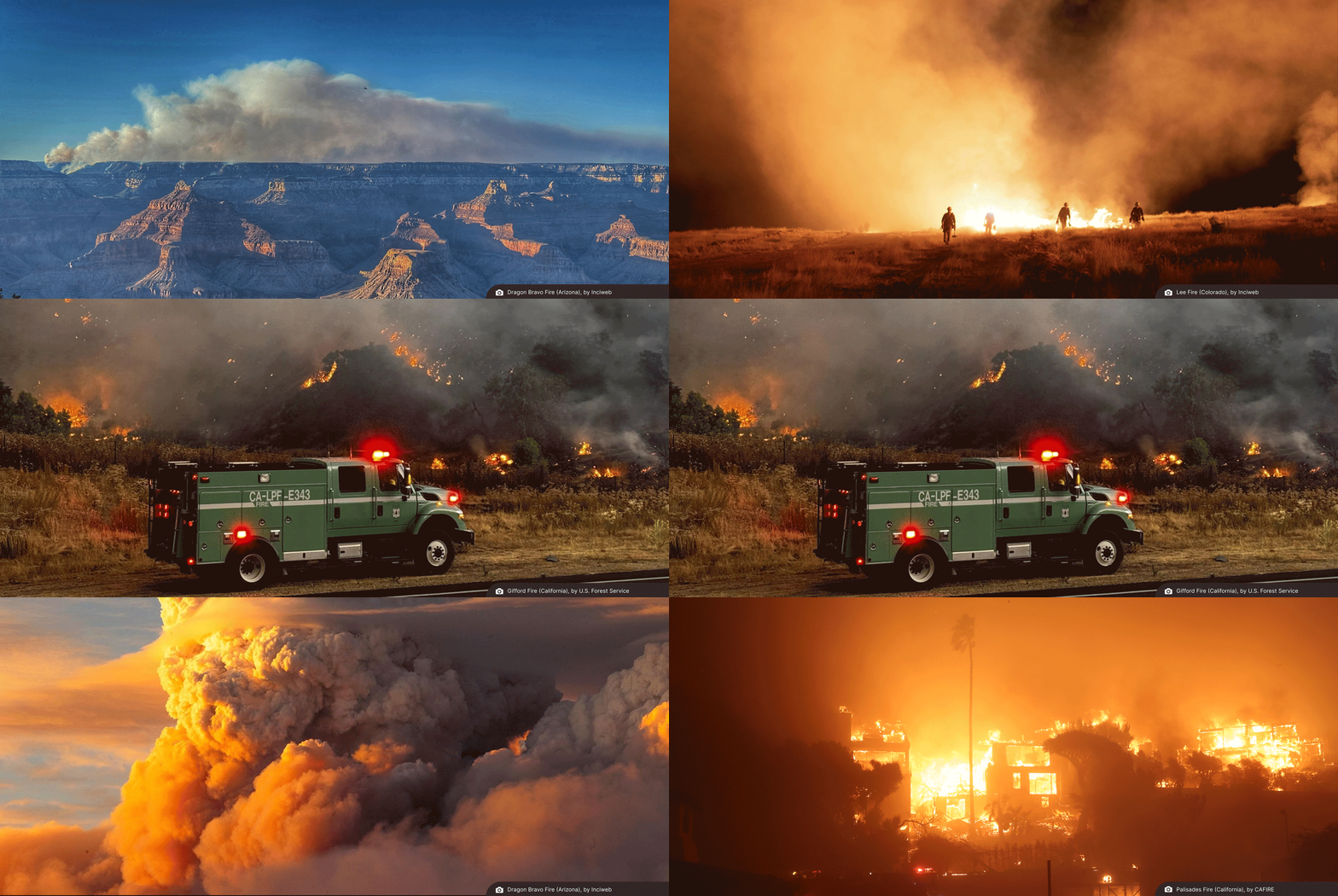
The 2024 wildfire season in the United States was characterized by continued growth of extensive
fire activity and costs. Per data from National Interagency Fire Center (NIFC),
42,280 wildfires burned 9.4 million acres, an area 12 times the size of Yosemite, marking a 40% increase from a decade ago and a fourfold rise from 40 years ago.
Suppression costs rose to $4.8 billion, a 250% increase in just the past decade, highlighting the growing complexity and expense of firefighting efforts. Moreover, 2025 began with the devastating Southern California fires, which have claimed 28+ lives, destroyed over 12k structures, and resulted in estimated economic losses exceeding $250B. Extreme weather conditions, characterized by drought, very low humidity, and strong wind fueled every megafire–fires over 40k acres– and drove regional wildfire surges.
Mitigating wildfire risk demands comprehensive and adaptive strategies, including enhanced fire detection, proactive land management to remove extant fuel on the ground, infrastructure hardening, community education, and climate change mitigation.
Notably, controlled burns reveal stark regional disparities: while no Western state conducts more than 250K acres of prescribed burns annually, Southeastern states like Florida and Georgia exceed 1M acres each year, with only 48K in wildfire losses last year. While the Western region faces some significant hurdles in burn execution, this disparity highlights both the feasibility and the efficacy of a strong prescribed burn program.
Our detailed recap of the 2024 and early 2025 wildfire seasons highlights critical trends, key incidents, and the urgent need for transformative solutions to combat the intensifying wildfire crisis.
Large fires drove cost and acreage burned
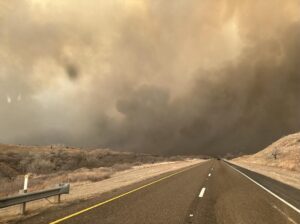
Smoke crosses a road the afternoon of February 29, 2024. Photo: Unknown / Inciweb
Smokehouse Creek & Windy Deuce Fires, Texas
The Smokehouse Creek Fire, the largest wildfire of the year and in Texas history, burned over 1 million acres. Together with the Windy Deuce Fire, these blazes destroyed 130 homes, claimed two lives, and caused an estimated $4.5 billion in long-term economic damages.
The alleged cause was downed power lines from a broken utility pole, due to inadequate maintenance. The fires were fueled by a perfect storm of extreme conditions, including gusting winds up to 50 mph, exceptionally low humidity, and prolonged drought.
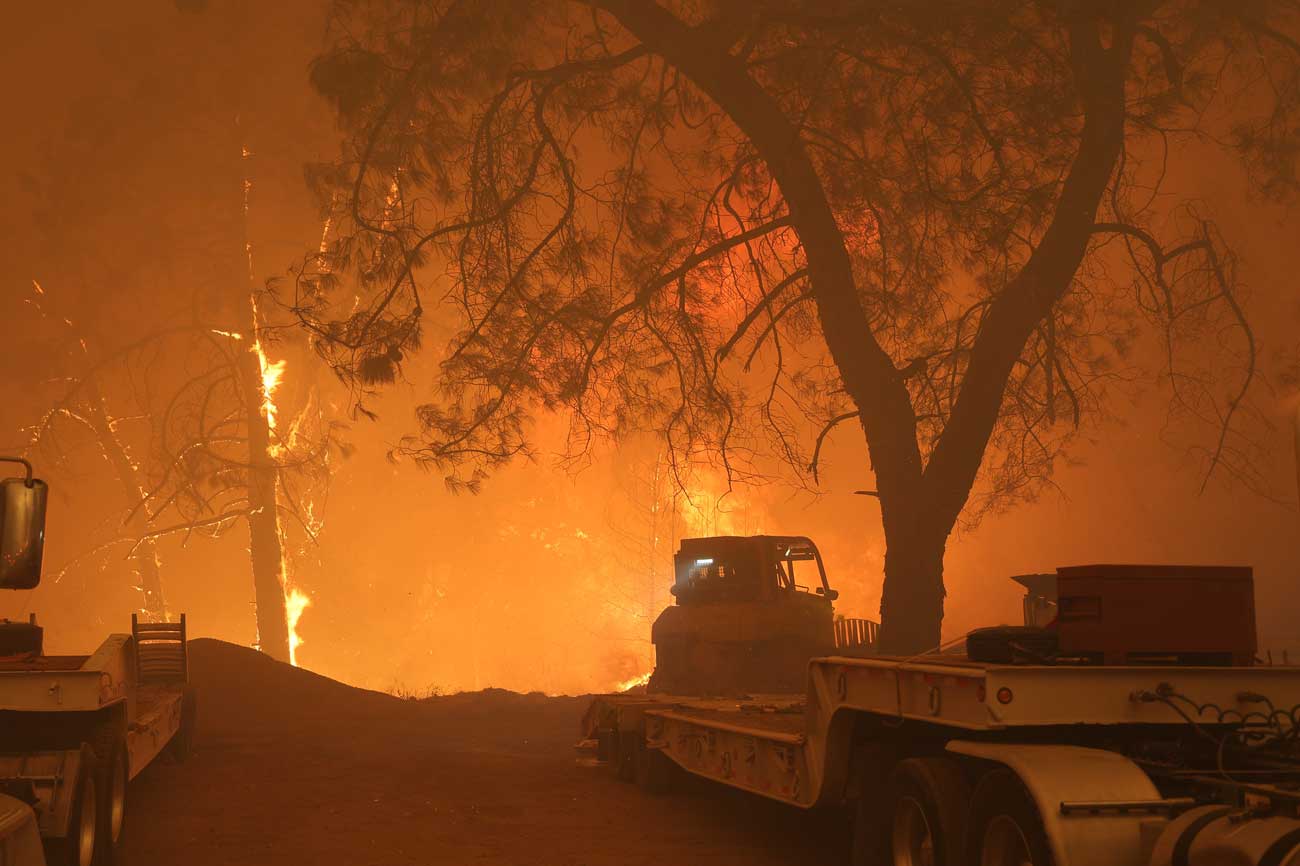
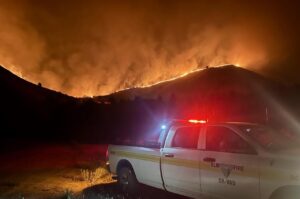
CALFIRE clears containment lines on the outskirts of the Park Fire. Photo: CALFIRE July 25,2024
Park Fire, California
Burning 430K acres, the Park Fire in NoCal was the second-largest wildfire of the year and the most expensive, costing $350 million. The fire grew explosively to roughly 45K acres within hours and over 350K acres in three days, destroying over 700 structures and forcing thousands to evacuate.
The fire was sparked by alleged arson involving a burning car and exacerbated by extreme heat, very low humidity, strong winds, and dry vegetation - July was California's hottest month on record, with temperatures often exceeding 100 degrees.
Occurring just miles from the 2018 Camp Fire in Paradise, the deadliest in state history, the fire was another grim reminder of California's ever present wildfire danger.
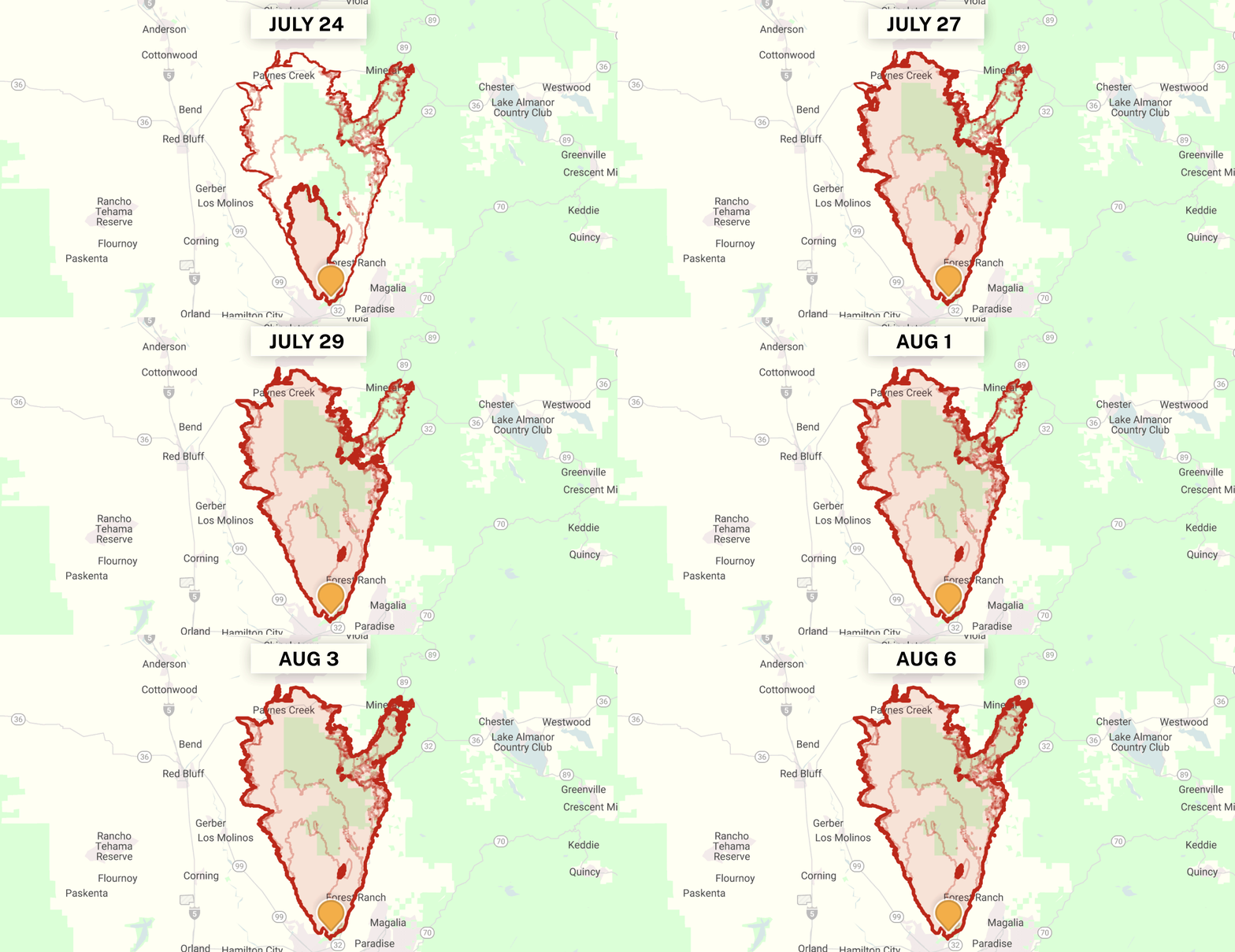
Figure.
Fire perimeters and progression for the Park Fire.
By Marcus Johnson, Vale District of the Bureau of Land Management - Durkee Fire on InciWeb, Public Domain, Link
Durkee Fire, Oregon
The Durkee Fire in Oregon rounds out the top three largest fires of the year. Sparked by lightning in mid-July, the fire burned nearly 300K acres and produced pyrocumulonimbus clouds, creating its own weather system and complicating firefighting efforts.
The fire's rapid growth was driven by the same extreme weather as the Park Fire, including record-setting high temperatures, extremely dry fuels, and gusting high winds. Oregon saw 12 of the nation's 39 megafires this year, all in this time span, costing $480M and burning 1.6M acres in total.
Megafire activity followed extreme weather
2024 Megafires
| Wildfire Name | Size (in Acres) | Est. Cost | Structures Destroyed | Cause | State | Start Month | Days Burned |
|---|---|---|---|---|---|---|---|
| LA Fires (Palisades, Eaton, Hurst) | 38,268 | Not reported (>$40B in losses) | 16,255 | Arson, Faulty power lines | CA | January | 41 |
| BUCK | 57,604 | $10.6M | Lightning | NM | June | 64 | |
| Trout | 47,294 | $45.2M | 2 | Lightning | NM | June | 104 |
| Klikhtentotzna | 117,908 | Not reported | Lightning | AK | June | 107 | |
| Christian | 64,065 | Not reported | Lightning | AK | June | 93 | |
| Moldy | 72,217 | Not reported | Lightning | AK | June | 102 | |
| Madre | 80,786 | $31.7M | Under investigation | CA | July | 26 | |
| Dragon Bravo | 145,504 | $135M | 113 | Lightning | AZ | July | |
| White Sage | 58,985 | $20.7M | 0 | Lightning | AZ | July | 165 |
| Monroe Canyon | 73,721 | $103M | 10 | Under investigation | UT | July | 105 |
| CRAM | 95,692 | $12.9M | 18 | Power generation / transmission | OR | July | 158 |
| Gifford | 131,612 | $202.5M | 5 | Under investigation | CA | August | |
| Jakes | 82,217 | $12.7M | 3 | Lightning | NV | August | 95 |
| Lee | 137,758 | $4.8M | 5 | Lightning | CO | August | |
| RED CANYON | 124,709 | Not reported | 0 | Lightning | WY | August | 47 |
| Cottonwood Peak | 132,603 | Not reported | Lightning | NV | August | 81 | |
| MILE MARKER 39 FIRE (06) | 48,000 | Not reported | 2 | Roadside Ignition | FL | August | |
| GARNET | 59,844 | $18.4M | 3 | Lightning | CA | August | 99 |
| LABOR MOUNTAIN | 42,962 | $29.6M | 6 | Lightning | WA | September | 107 |
| LOWER SUGARLOAF | 42,958 | Not reported | 0 | Lightning | WA | September | 105 |
| BLACK ROCK | 43,965 | $22.1M | 4 | Lightning | OR | September |
Figure. The 2024 megafires (>40,000 acres), showing acres burned, cost, and start month.
Wildfire activity in 2024 followed a strikingly regional progression, driven by prevailing weather and seasonal conditions.
Early in the year, grass-fueled megafires broke out in Texas, Oklahoma, and Nebraska due to extreme winds and low humidity in the Great Plains region. By June, activity shifted to Alaska, where fires, though vast, posed minimal risk given the state's low population density.
In July, fire activity intensified across the West and Northwest, with megafires igniting in Oregon, Washington, California, and Idaho due to a much hotter-than-normal summer and an abundance of fine fuels left behind by an unusually wet winter and spring. Late August and September saw July followed by continued heatwaves across the region, leading to five megafires in Wyoming, two in SoCal and others in Idaho and Oregon.
Wyoming, typically less affected, saw grassland fires driven by strong winds and dry fuels. The fire season extended into December again this year with the Franklin Fire in Malibu burning over 4000 acres and causing over 20,000 residents to evacuate. These five states accounted for 66% of all acres burned nationwide, totaling 5.6 million acres.
In a rare shift, the Northeast and Mid-Atlantic regions experienced heightened wildfire activity in October due to severe drought, including the Jennings Creek Wildfire in the NYC metro region which burned over 4,000 acres.
New Jersey reported over 300 wildfires this fall, a tenfold increase, and Connecticut saw over 150 fires, after just five the previous year. This unprecedented wildfire activity highlights the growing impact of climate change on urban and suburban areas traditionally less prone to such events.
The 2025 fire season began with deadly LA fires
2025 began with the devastating fires in Southern California including the Palisades, Eaton and Hurst fires.
Roughly 57K acres have been burned across more than 25 major wildfires in Southern California. At least 28 people have lost their lives and more than 12K structures have been destroyed - for comparison, about 700 structures were destroyed in the Park Fire, 2024's most destructive fire. The situation remained critical for nearly all of January with red flag warnings in effect for much of the region due to drought, low humidity, warmer than average weather, and hurricane-force Santa Ana winds.
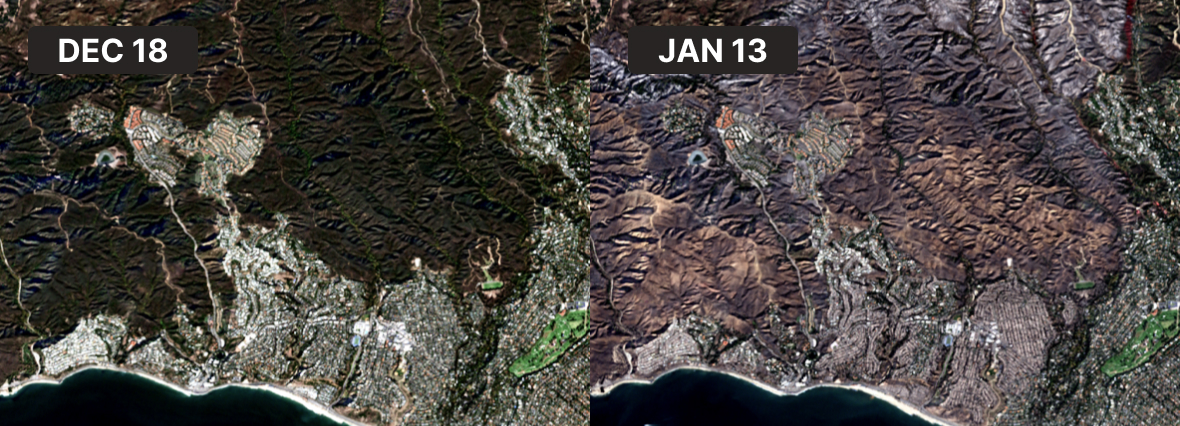
Figure. Sentinel-2 satellite images depicting the Pacific Palisades region before and after fire start.
The 2025 outlook indicates another year of extreme wildfire activity. The fire season is expected to continue with a transition from El Niño to La Niña conditions early this year, typically leading to more storms in the northern US and warmer and drier conditions in the southern US.
Combating Escalating Wildfire Threats
The statistics for 2024 are emblematic of an era in which wildfires are more severe and expensive than ever. As the new year begins, the urgency for transformative wildfire management solutions has never been greater. Adaptive and mitigating strategies to safeguard lives, property, and natural landscapes against an increasingly volatile future are in development, require more widespread adoption, and include:
-
Enhanced fire detection and suppression techniques
Advanced technologies include remote sensed monitoring, AI-powered risk and behavior prediction models, and improved firefighting equipment such as Very Large Airtankers (VLATs) and Water Scoopers that optimize delivery of fire retardant and water.
-
Proactive land and ecological management
Implementing strategies like controlled burns, grazing, and vegetation clearing reduces fuels on the ground, fire risk and the potential for catastrophic wildfires. Moreover, much of the US forestland is fire-adapted, meaning it depends on periodic fires for regeneration and healthy ecosystem maintenance.
-
Building and infrastructure hardening
Increased wildfire severity and cost demand increased adoption of hardening strategies to protect homes and critical, fire-prone infrastructure like electrical lines, including vegetation clearing, use of fire-resistant materials and design, and other infrastructure preparedness.
-
Community awareness and education
Fostering a culture of preparedness informs, empowers, and can generate the support required to implement mitigating strategies. Data sharing and transparency for real-time wildfire data and prevention efforts is critical to that effort.
-
Climate change mitigation
A long-term strategy to invest in mitigating the root causes of increasing wildfire frequency and severity will encompass initiatives to both reduce emissions as well as drawdown extant carbon is needed. The 2022 Inflation Reduction Act provides for roughly $370B over 10 years towards this goal [parts of this funding are frozen as of 1/29/2025] and VC investment was $28B in 2023.
Increased land management and reporting is critical to reduce wildfire risk
Returning to a regimen of restorative land management policies is critical, including a reversal of total fire suppression policies, the use of prescribed fire, mechanical thinning, and other fuel management activities. These practices reduce wildfire risk by removing fuels on the ground, enhance forest health by favoring fire-resistant trees and fire-adapted flora and fauna, and mitigate climate change.
Prescribed burn acreage has doubled over the past five years according to NIFC's data, a promising trend. The Southeast is a leader in this effort, with Florida and Georgia collectively conducting prescribed burns on over 3M acres in 2024 while limiting wildfire losses to just 48K acres. By contrast, California reported only 155K acres of prescribed burns in 2023, per the state's Prescribed Fire Incident Reporting System (PFIRS) – notably, prescribed burn and land management reporting is known to be notoriously incomplete, underscoring the need for increased reporting and transparency. While California faces bigger hurdles in burn execution because of its long history of total fire suppression, more complex terrain, and regulatory and operational requirements along with community hesitance, this disparity highlights both the feasibility and the efficacy of a strong prescribed burn program. Scaling up these practices is vital to building wildfire resilience and protecting communities in the face of a changing climate.
Citations
- Total Incidents, NIFC 2024
- Texas Smokehouse Turns Deadly, Fox News 2024
- The Smokehouse Fire, Wikipedia Foundation
- The Smokehouse Fire Containment Details, The Statesman
- CALFIRE Incidents, 2024
- CALFIRE Press Updates, July 24 2024
- The Park Fire, Wikipedia Foundation
- The Durkee Fire Keeps Growing, OPB July 25 2024
- Oregon's Durkee Fire created its own weather, CBS News
- The Line Fire, Wikipedia Foundation
- Wildfires Spread Across New Jersey and Connecticut, The New York Times, Nov 2024
- The United States of Fire, American Forests
- The Southern California Wildfires, Wikipedia Foundation
- Damages from LA Wildfires top $250 Billion
- The Prescribed Fire Report, State Foresters
- Interagency Tracking Systems
Written with the help of Perplexity.AI, ChatGPT and Gemini.